
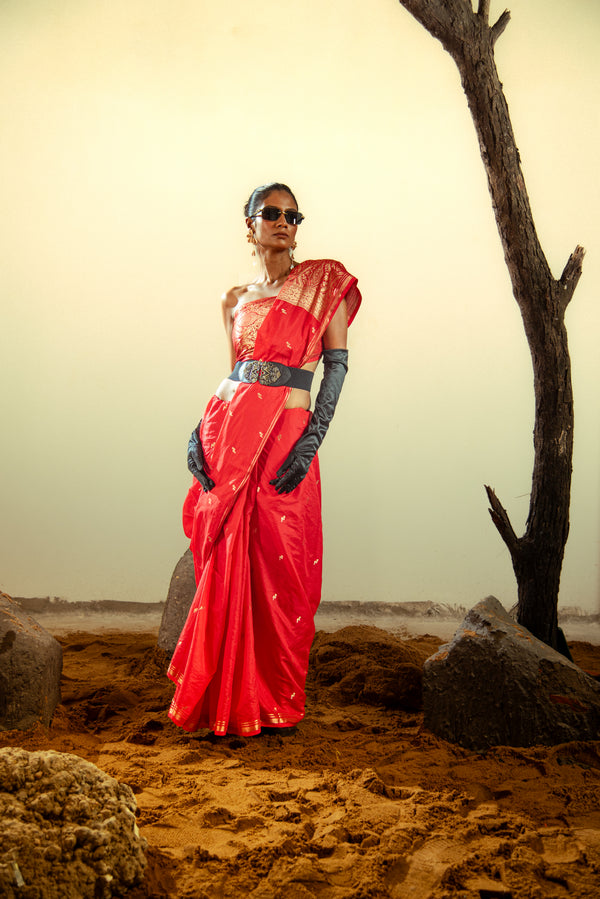

DIWALI SAREE
A Diwali saree should hold its lustre under diya-light and gulal alike — handloom Banarasi tissue, Tanchoi, and Katan silks in the festive palette, woven for the five-day Deepavali calendar and pre-stitched for the long evening.
A Diwali saree exists for one specific photographic register: handloom silk catching diya-flame in low warm light, against a backdrop of rangoli and marigold. The Diwali festive saree must hold its lustre after sundown — silk that absorbs warm 2700K diya light and reflects it back as glow, not as glint. Powerloom synthetics flatten under the same lighting; polyester reads as plastic against the diya-flame. Danyah Banaras weaves Diwali sarees in pure mulberry tissue, Tanchoi, Katan, and Sonarupa specifically calibrated for the low-light festive calendar — Dhanteras through Bhai Dooj — and our pre-drape gives you the silhouette resilience to wear the same piece across three nights of pujas, family dinners, and Lakshmi photographs.
Diwali is a five-day festival with a different dress register for each evening — Dhanteras (gold-emphasis), Naraka Chaturdashi (jewel-tone), Lakshmi puja (red, gold, pink), Govardhan puja (lighter festive), Bhai Dooj (occasion-formal). A festive Diwali wardrobe is rarely one saree; it is a sequence. The textile decisions for each night follow the lighting and the occasion.
Dhanteras calls for tissue or gold-zari Banarasi — the day celebrates wealth (and the household silver), so the saree itself reads as 'metal'. A tissue Katan in champagne, ivory, or gold-pink photographs as 'precious'; the continuous zari weft catches diya-light better than any other Banarasi specification. Tissue is heavy and structured — best for the seated puja and the family photograph rather than for dancing or moving through crowded gatherings.
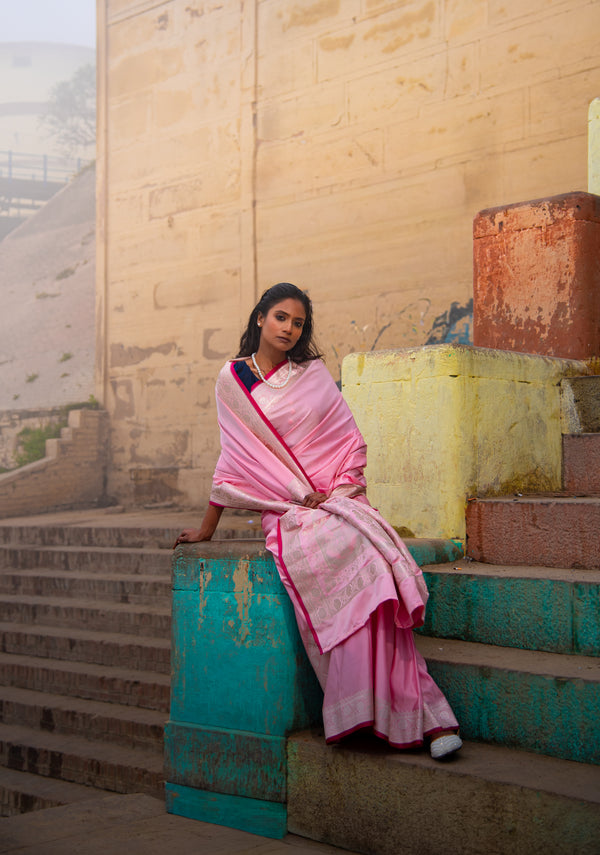
Lakshmi puja night is the formal centerpiece. Red Katan silk with full meenakari pallu (sindoor, gulabi, anaar) is the traditional choice; pink-and-gold combination Banarasis are the contemporary alternative for women who already wore red at the wedding. Real silver zari is non-negotiable — Lakshmi puja photographs sit in family albums for decades, and plastic zari does not survive the lighting.
Bhai Dooj is the warmer, more domestic evening — Tanchoi in oxblood, plum, jewel-tone teal, or rose-gold works beautifully. The Tanchoi extra-weft brocade reads as quietly opulent rather than overtly festive; the saree sister-and-brother photograph captures the textile detail without competing with the tilak ritual itself.
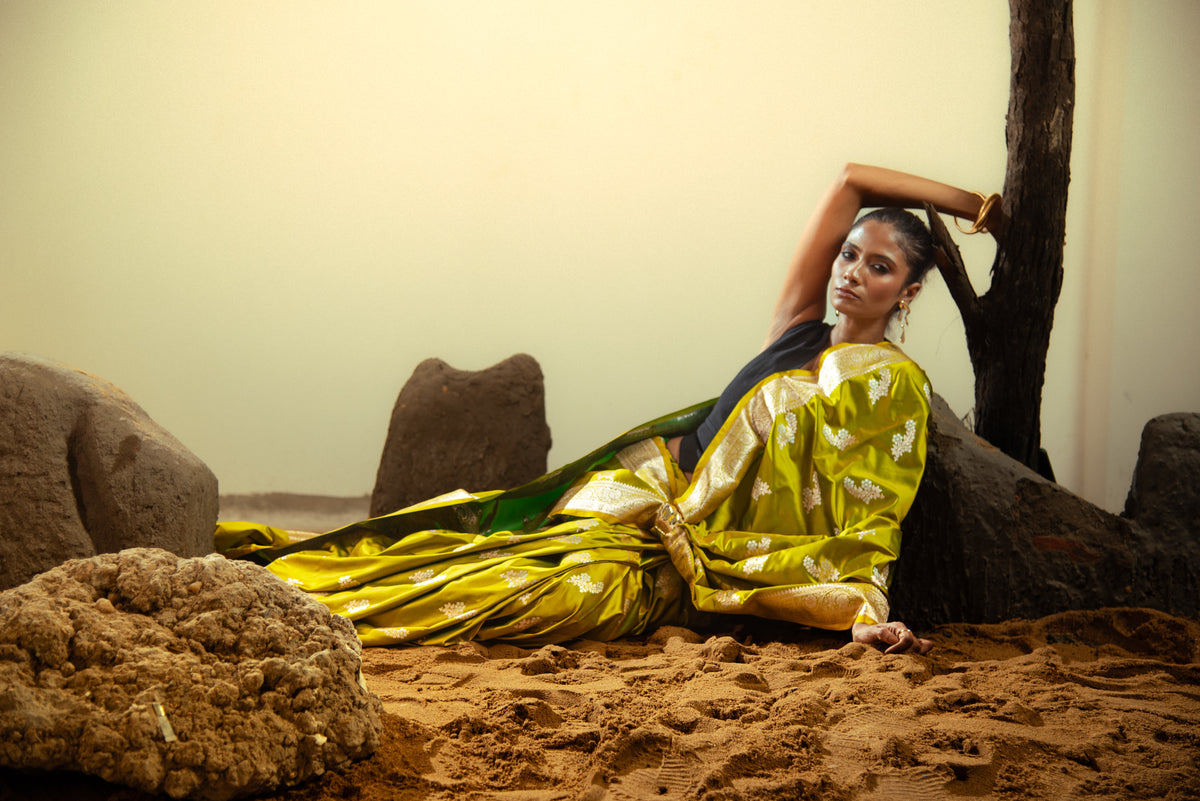
Naraka Chaturdashi and Govardhan are the lighter evenings — organza Banarasi in lighter pinks, sea-green, ivory, or sunset orange is the call. Organza is the dance-friendly Diwali choice; many families have an informal evening of music and food on one of these nights, and the lightweight organza is the textile that handles movement without losing the festive lustre.
Across all five nights, three weave criteria define a proper Diwali saree. Pure mulberry silk (no blends — the burn test separates real silk from polyester in seconds), real tested silver zari dipped in 24-karat gold (60-70% silver minimum; plastic zari flakes within three years and dulls under diya-light immediately), and handloom weaving with the weaver's signature woven into the inner edge. The GI tag on the certificate names the cluster of origin.
For the pre-drape: Diwali evenings stretch from the early-evening puja through the late dinner and the post-midnight photographs. Traditional drapes shift across six hours of seated and standing transitions; the pallu slips during the aarti, the pleats loosen at the dinner table. Our pre-draped Diwali saree stitches the pleats and pallu onto a fitted petticoat to your exact measurements — you slip into the saree once, the silhouette stays identical from the Lakshmi puja photograph at 7 p.m. to the diya-immersion photograph at 1 a.m. No pins to catch on the puja thali or the diya tray.
Care after Diwali matters: the festive saree absorbs gulal, attar, diya-oil splatter, and food-table contact across the five days. Take the saree to a couture dry-cleaner within ten days of Bhai Dooj — do not store with stains, which set permanently on Katan silk. Store in unbleached muslin (never plastic), refold every three months, and inspect the zari before the next year's Dhanteras; our atelier offers a zari re-dipping service that restores the 24-karat gold finish.
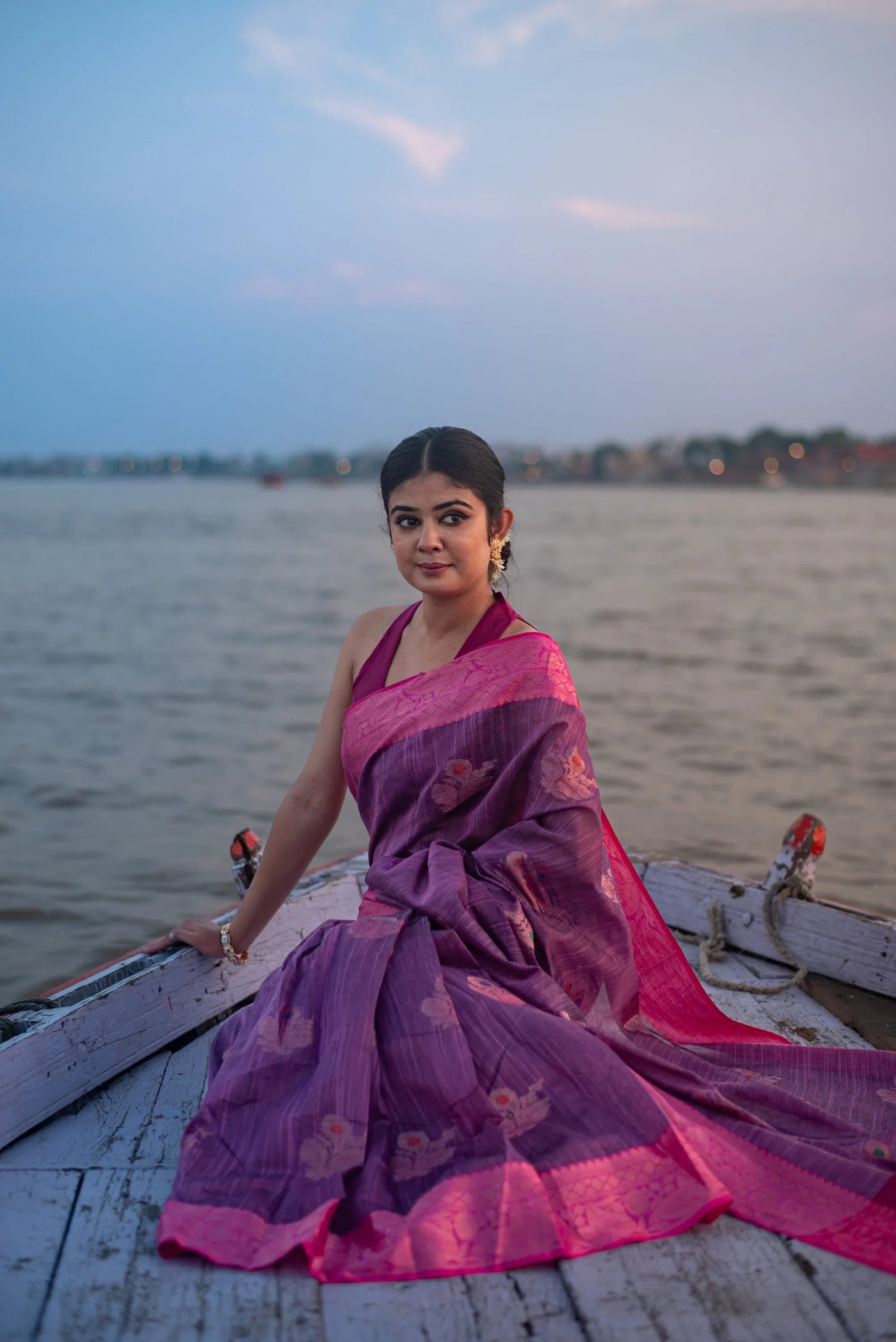
FAQ
A Diwali saree is a festive silk saree calibrated for the five-day Deepavali calendar — Dhanteras through Bhai Dooj — typically a handloom Banarasi in tissue, Katan, Tanchoi, or Sonarupa silk with real silver-and-gold zari that catches diya-light in 2700K warm lighting. The festive silk saree is structured for evening pujas, family dinners, and the long-exposure photographs that define the festival album. A proper Diwali saree is pure mulberry silk (not synthetic blends), with real tested silver zari (60-70% silver minimum) that does not flake under diya-flame and gulal.
A festive silk saree for Diwali is for any woman in the household — the daughter-in-law leading the Lakshmi puja, the mother-in-law receiving guests, the daughter and sister at the family dinner, the NRI flying home for the family Deepavali, the host of the office Diwali evening. Many of our customers buy one new Diwali saree each year — a tissue for Dhanteras one year, a Tanchoi for Bhai Dooj the next — building a five-day festive wardrobe across multiple Diwalis rather than overspending in a single season.
The five-day rule: Dhanteras wants tissue or gold-zari (the metal evening); Lakshmi puja wants red Katan with full meenakari pallu (the formal centerpiece); Bhai Dooj wants Tanchoi in oxblood, plum, or rose-gold (the warm domestic evening); Naraka Chaturdashi and Govardhan want lighter organza in pinks, sea-green, or sunset (the dance-friendly evenings). Across all five, choose pure handloom silk, real silver zari, and view the saree under warm diya-light or 2700K incandescent — not retail fluorescents.
Diwali evenings stretch from early-evening puja into past-midnight photographs. Traditional drapes shift over six hours of seated puja, standing aarti, and dinner-table movement; the pallu slips and the pleats loosen. Our pre-draped Diwali saree stitches the pleats and pallu onto a fitted petticoat to your measurements — you slip on the saree once, the silhouette stays identical from the 7 p.m. puja to the 1 a.m. diya-immersion. No pins to catch on the puja thali or the diya tray. Many customers buy one pre-draped piece for the puja evening and re-wear the six-yard format for less photograph-heavy nights.
A handloom Banarasi Diwali saree carries 60-200 hours of master-weaver labour, pure mulberry silk, and real silver zari. Tissue Banarasi Diwali pieces run ₹50,000 to ₹1,80,000; Katan ₹40,000 to ₹2,00,000; Tanchoi ₹35,000 to ₹1,20,000; Sonarupa ₹25,000 to ₹80,000; organza ₹20,000 to ₹70,000. Any 'Diwali silk saree' priced below ₹6,000 is powerloom with plastic zari that flakes under diya-flame within a single season and visibly dulls under the family album lighting. Our prices fund the weaver wage, GI certification, and the lifetime zari re-dipping service.
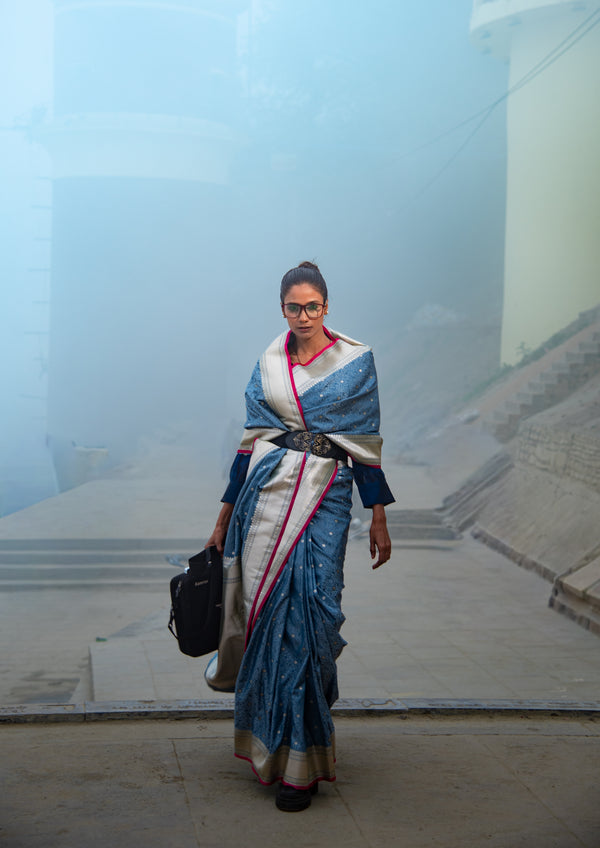
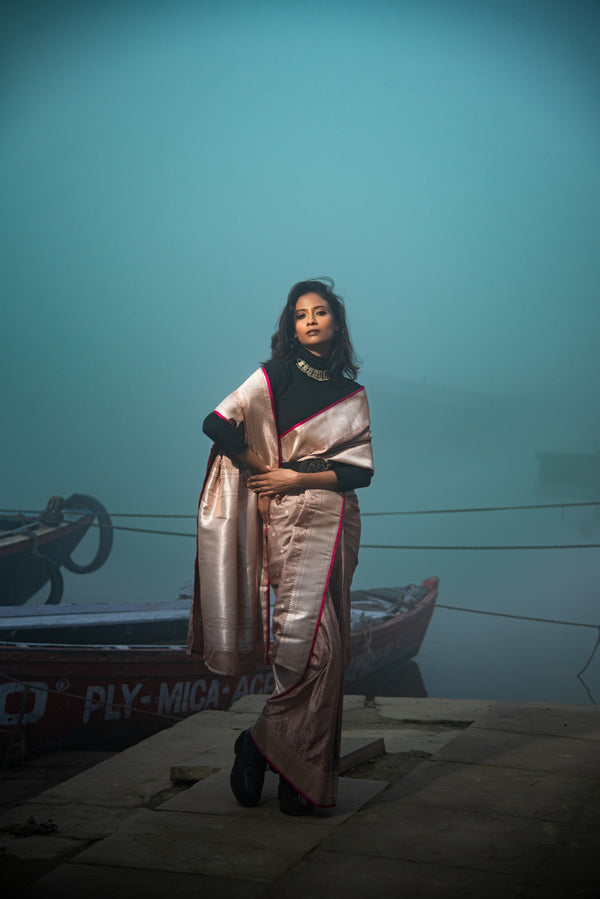
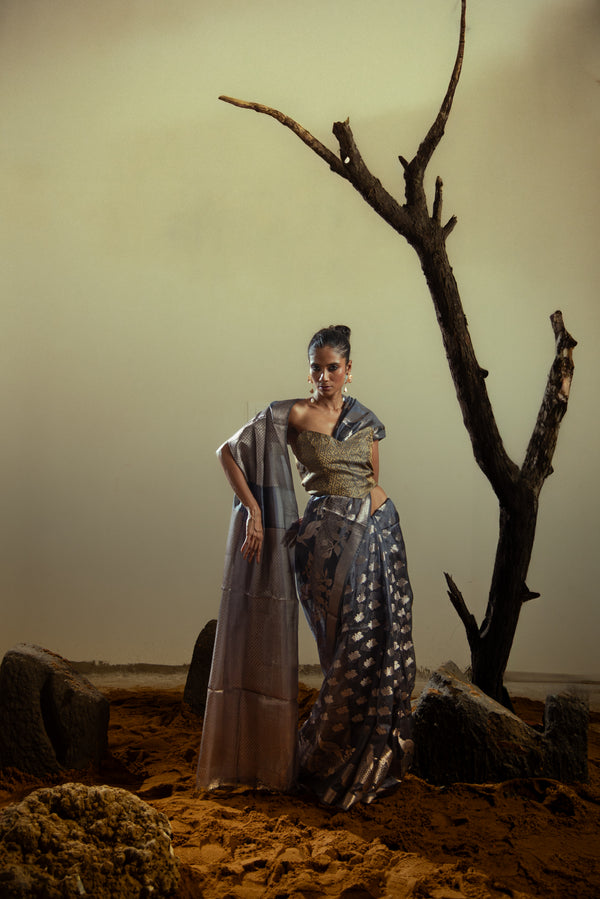
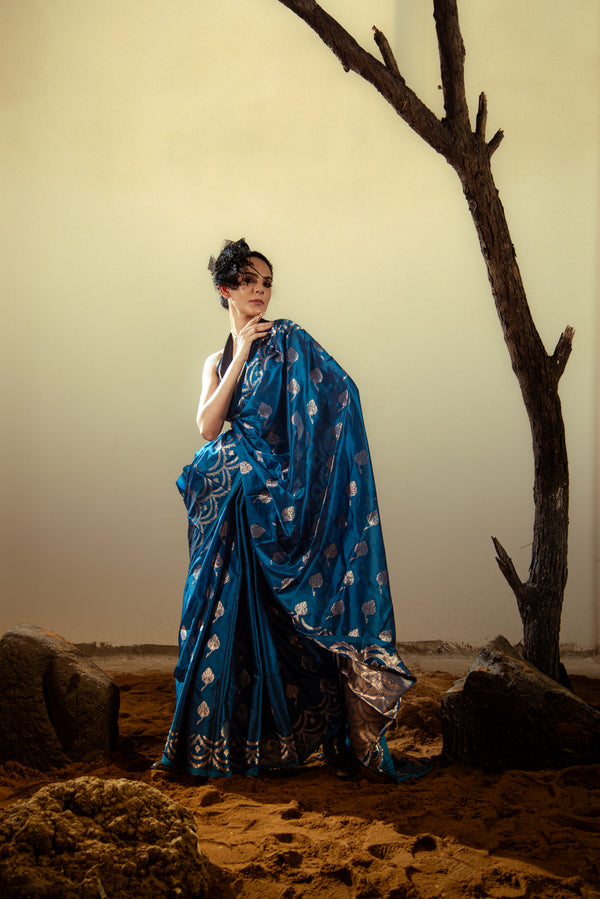
Tissue, Katan, Tanchoi and Sonarupa Banarasi sarees calibrated for the diya-light festive calendar.







Related guides
Pillar guides, sibling festive pages, and the silk collections drawn from the Varanasi looms.
Continue reading
Verified buyers · reviews from women hosting and attending Diwali in our pieces