
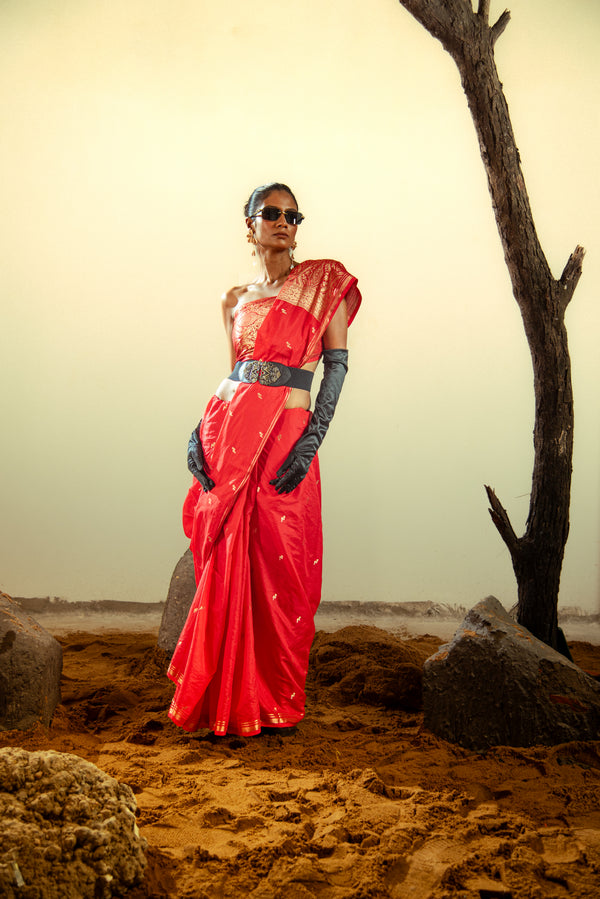

SILK SAREE FOR WEDDING
Pure handloom silk sarees for the modern Indian wedding — Katan, Tanchoi, tissue, Tanchoi and Dupiyan — woven in Varanasi and engineered for the bride, the bride's family, and the wedding guest who refuses costume.
A silk saree for wedding is the most considered purchase in the Indian wardrobe. The piece you wear to the pheras, the reception, the sangeet, or the cocktail evening shapes every photograph, every memory, and — if it is the bride — every future re-wearing. Danyah Banaras is a four-generation Varanasi atelier; we weave wedding silk sarees in pure mulberry Katan, Tanchoi, tissue, Dupiyan, and Sonarupa for brides, mothers, sisters, and the wedding guest who wants to wear handloom heritage instead of polyester couture. Every piece is GI-tagged, signed by the master weaver, and shipped with the same care whether the saree is the bride's pheras Katan or a guest's reception Tanchoi.
The Indian wedding is rarely one event; it is a five-day cluster of functions, each with its own dress code, lighting, and photographic register. The right silk saree for a wedding depends on which event, which role, and which time of day. Below is the working framework our atelier uses with brides and bridal parties — refined across four generations of dressing weddings.
The pheras saree is the wedding-weight kadhua Katan silk Banarasi — heavy, sculptural, photographing as 'regal'. Sindoor laal, maroon, or — for non-conformist brides — ivory tissue or emerald Katan. 200-400 weaver-hours; 8-14 months at the Madanpura pit loom. The reception saree is a lighter Katan or a Tanchoi in maroon, anaar, oxblood, or jewel-toned blue — formal but danceable. The sangeet saree is a Tanchoi or organza Banarasi in pink, green, ivory, or sunset orange — light enough for choreography. The mehendi saree is typically a yellow or green organza or a linen Banarasi — sit-on-the-floor friendly.
The mother of the bride saree is the highest-stakes guest-role saree in the room. A Tanchoi Banarasi in oxblood, deep teal, plum, or rose-gold is the canonical choice — formal enough to read as 'parent of the bride' but not so heavy it competes with the bride's pheras Katan. Real silver zari is non-negotiable here; the mother of the bride sits in every family portrait. A pre-draped Tanchoi in this register removes the wedding-morning pin anxiety completely.
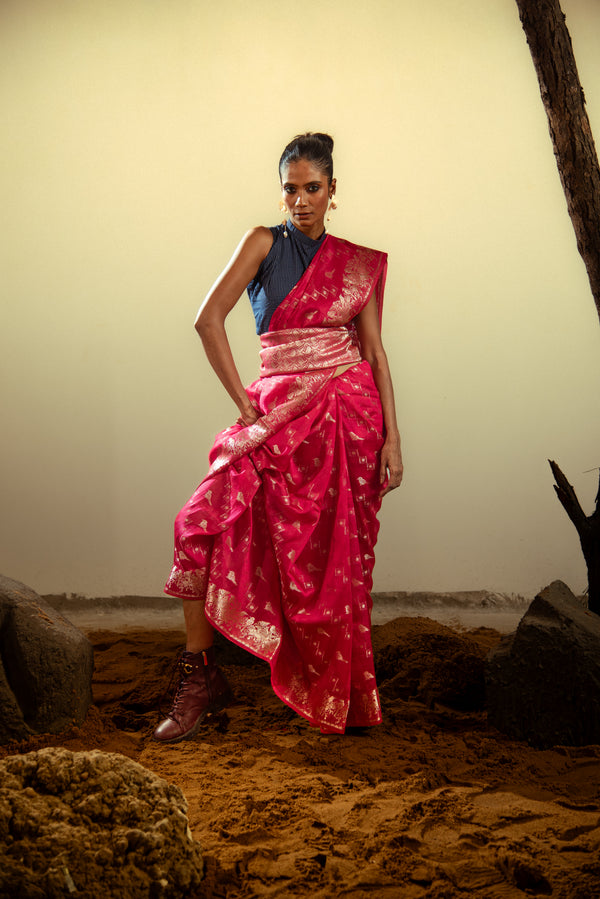
The sister of the bride silk saree trends younger — organza Banarasi, Sonarupa silk, or a Dupiyan in jewel-tone with sangeet-friendly fluidity. A 30 to 100-thousand-rupee range is typical; this is the saree you will re-wear at three more weddings in the next two years, so re-wearability matters.
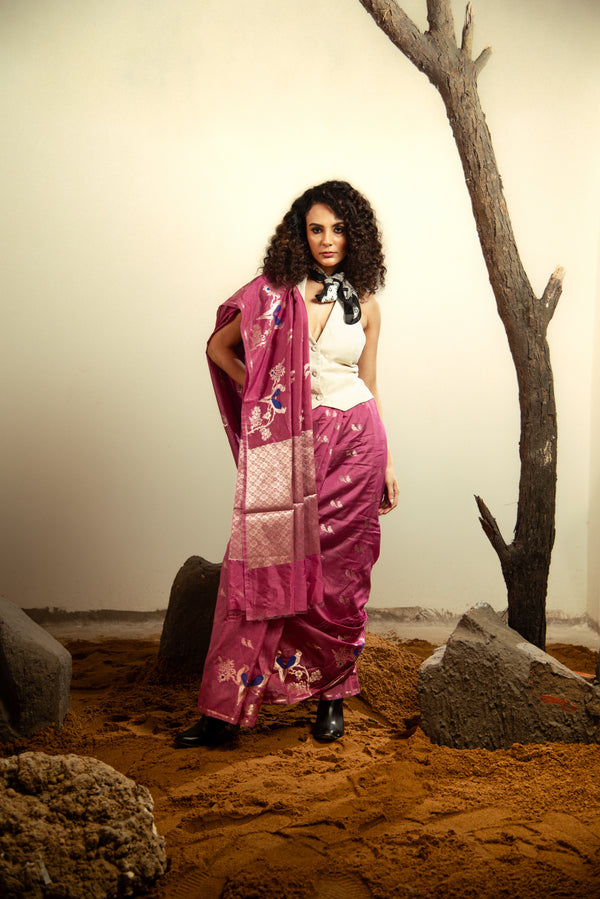
The wedding guest silk saree sits one notch quieter than the bride's family register. A medium-weight Tanchoi, Katan with restrained zari, or a Sonarupa is the right register. Avoid red (it competes with the bride), and avoid the heaviest kadhua brocades. Pre-drape is especially useful here — wedding guests rarely have a draper on call, and the pre-draped silk saree means you arrive at the venue camera-ready.
Across all roles, a wedding-weight silk saree must have: pure mulberry silk warp and weft (no blends — burn-test the first warp thread if buying outside our atelier), kadhua, kadhwa, or extra-weft Tanchoi brocade (clean reverse), real tested silver zari dipped in 24-karat gold (60-70% silver minimum), and a paper certificate naming the GI cluster, the weaver, the loom-type, and the brocade technique. Powerloom imitations sold under 'wedding silk saree' marketing flake within three years and carry no resale or heirloom value.
On the pre-drape question: the traditional Nivi drape for a wedding silk saree takes a skilled draper 20-30 minutes, requires safety pins, and shifts slightly across a twelve-hour function. The pre-draped wedding silk saree from Danyah Banaras stitches the pleats onto a fitted petticoat skirt to your exact measurements, pre-pleats the pallu with concealed brass hooks, and slips on in sixty seconds. The textile, weave, weaver, and silhouette remain unchanged — the only thing we engineer is the wearing experience. Brides who pre-drape for the wedding still get the saree as six full yards for re-draping later in life or for an heirloom handover.
Timing: wedding-weight silk sarees take 8-14 months on the loom plus 2-3 weeks for pre-drape stitching. Commission 9-12 months ahead of the wedding for the bridal piece; reception sarees and guest pieces can be ordered 4-6 months out. Our concierge plans the trousseau timeline alongside the wedding calendar.
FAQ
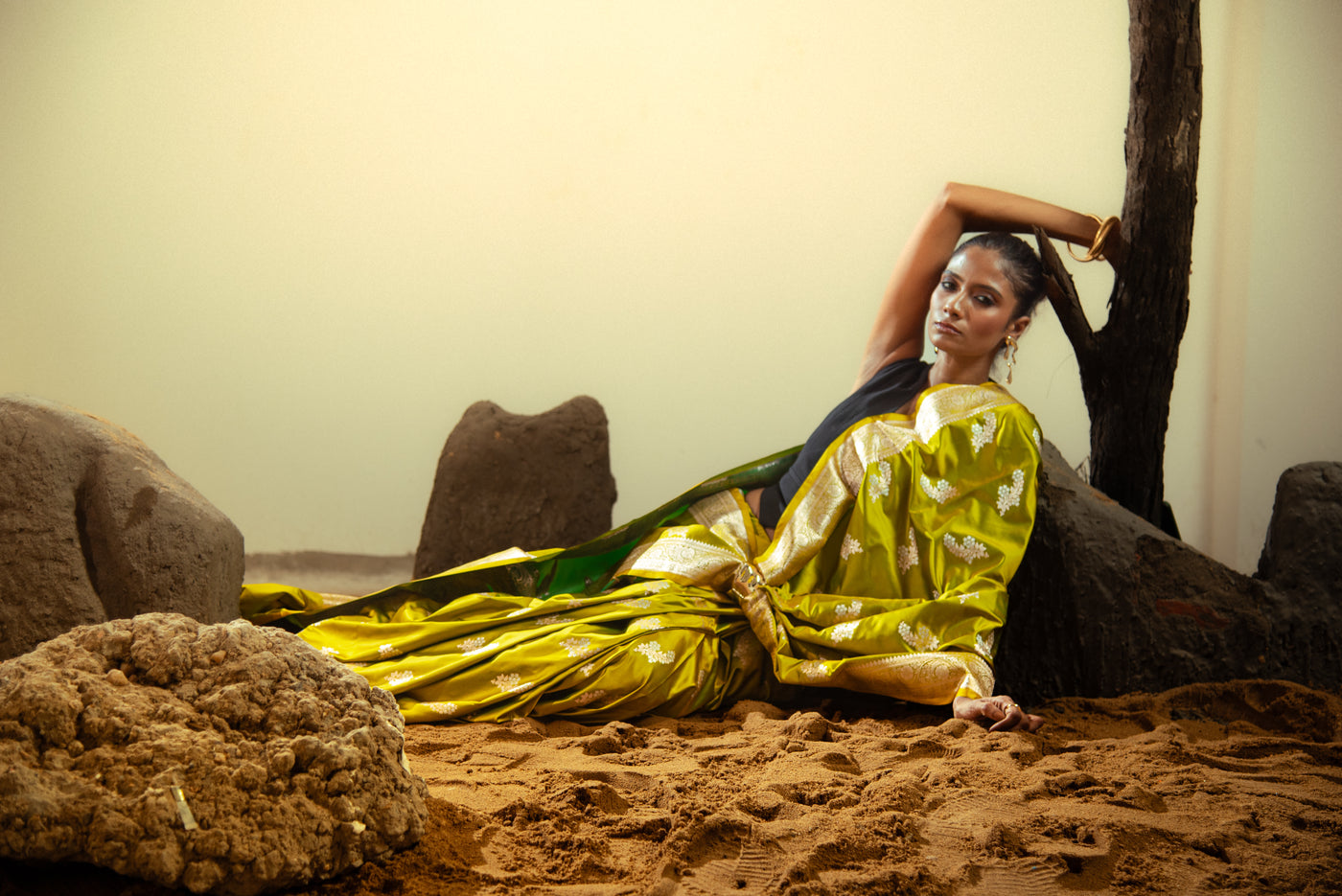
A silk saree for wedding is a handloom Banarasi or south-Indian silk woven in pure mulberry silk with real tested silver zari, calibrated to a specific role and ceremony. The bride wears kadhua Katan for the pheras and Tanchoi or tissue for the reception; the mother of the bride wears a Tanchoi in oxblood, plum, or teal; the sister of the bride wears Sonarupa or organza in jewel tones; the wedding guest wears a Tanchoi or Sonarupa one notch quieter than the family register. Every piece should carry a GI tag, a kadhua reverse, and real silver zari.
A wedding silk saree is for everyone the wedding touches: the bride at her pheras and reception, the bride's mother in the kanyadaan, the bride's sister at sangeet, the bride's grandmother in the family portrait, and the wedding guest dressing with cultural seriousness rather than costume. NRIs flying home for an Indian wedding find our pre-draped wedding silk sarees especially useful — sixty seconds to drape, no on-call draper, no shifting through the twelve-hour function. Each role has its weave specification; our concierge guides the right pick.
Three filters. Role: bride (kadhua Katan), mother of bride (Tanchoi, deep tones), sister (organza, Sonarupa, jewel tones), guest (medium Tanchoi or Sonarupa). Ceremony: pheras (heaviest), reception (formal but danceable), sangeet (light, fluid), mehendi (organza or linen). Time of day: morning ceremonies suit pinks and ivories; evening events suit deeper jewel tones. Always view the silk under 3000K warm light — banquet lighting, not retail fluorescents. We ship swatches worldwide before you commit.
The traditional Nivi drape takes 20-30 minutes with a draper, plus safety pins, and shifts gradually across a twelve-hour function. The Danyah Banaras pre-draped wedding silk saree stitches the pleats onto a fitted petticoat skirt to your exact measurements, pre-pleats the pallu with concealed brass hooks, and slips on in sixty seconds. The silhouette stays identical from haldi through pheras to reception. No pins, no slipping pallu, no draper on call. For brides who want both: we ship the saree as six full yards plus the pre-drape petticoat, so you can re-drape traditionally later.
A handloom wedding silk saree carries 200-400 hours of master-weaver labour in Varanasi, pure mulberry silk warp and weft, and real tested silver zari dipped in 24-karat gold. Wedding-weight Katan silk pieces run ₹80,000 to ₹3,00,000; Tanchoi reception pieces ₹40,000 to ₹1,20,000; lighter Sonarupa and organza ₹25,000 to ₹80,000. A 'wedding silk saree' priced below ₹15,000 is almost certainly powerloom with plastic zari that flakes within three years. Our prices fund the weaver wage, the GI certification, the bespoke pre-drape stitching, and the lifetime atelier service for any piece we have woven.
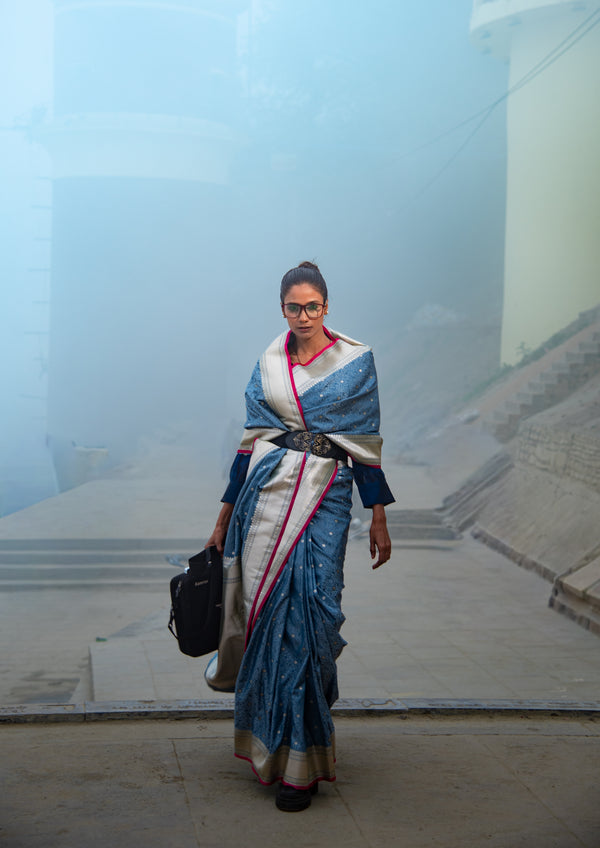
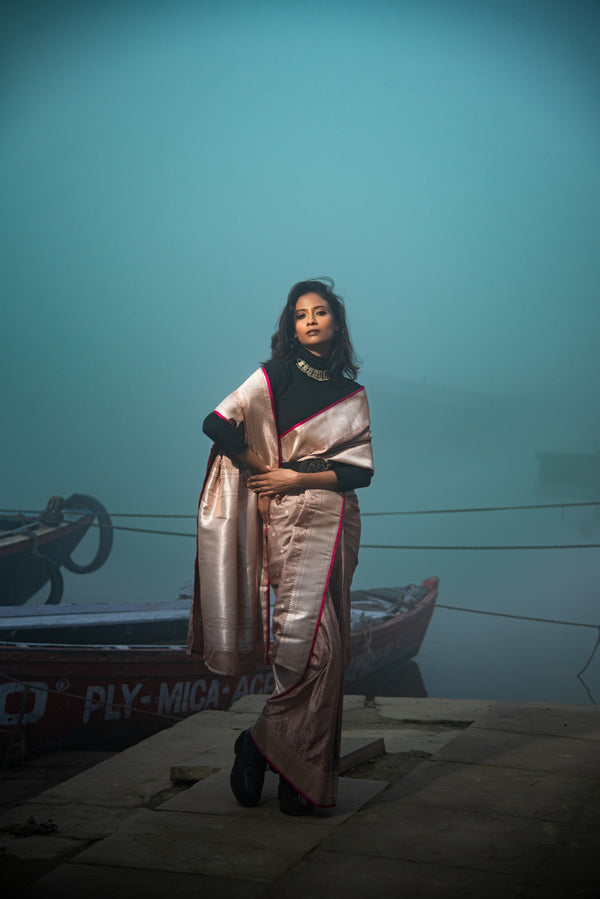
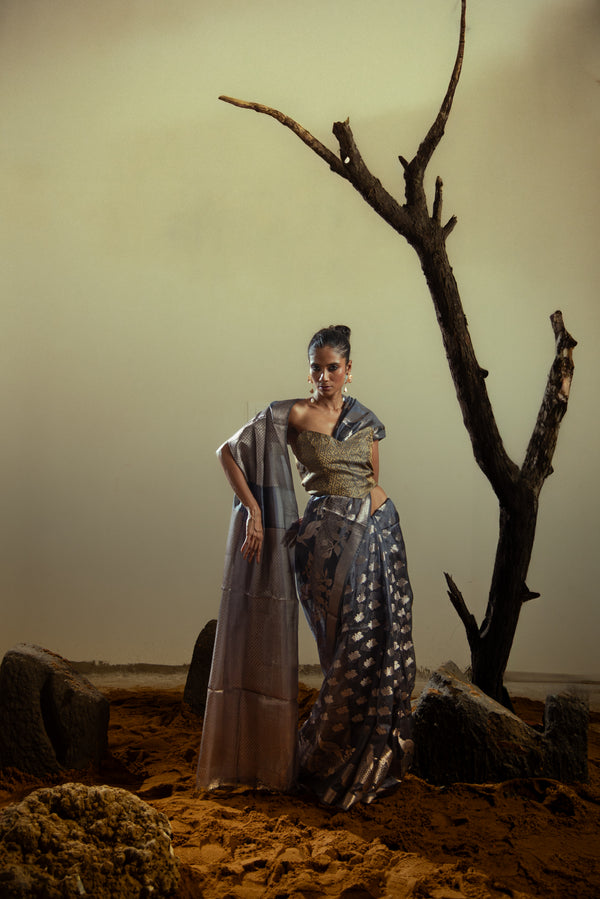
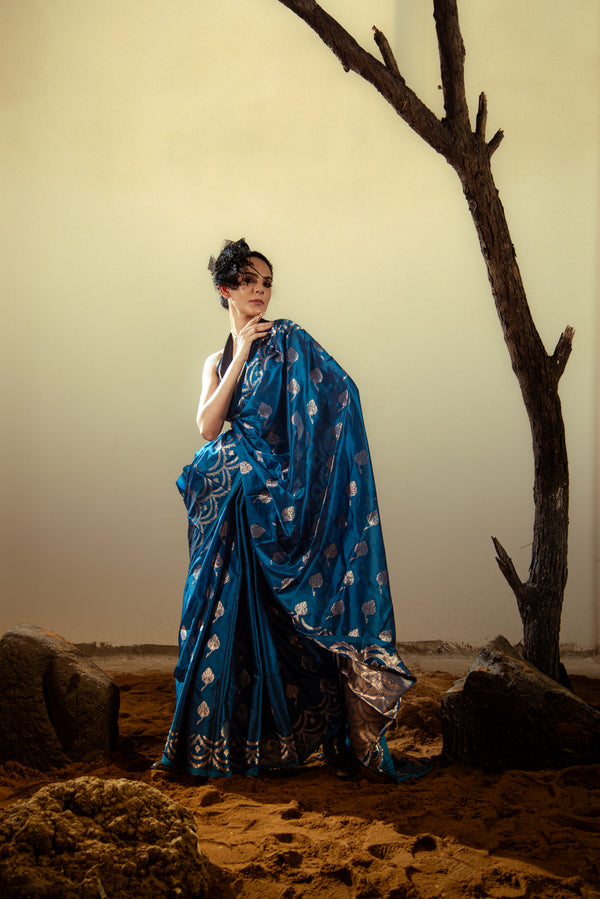
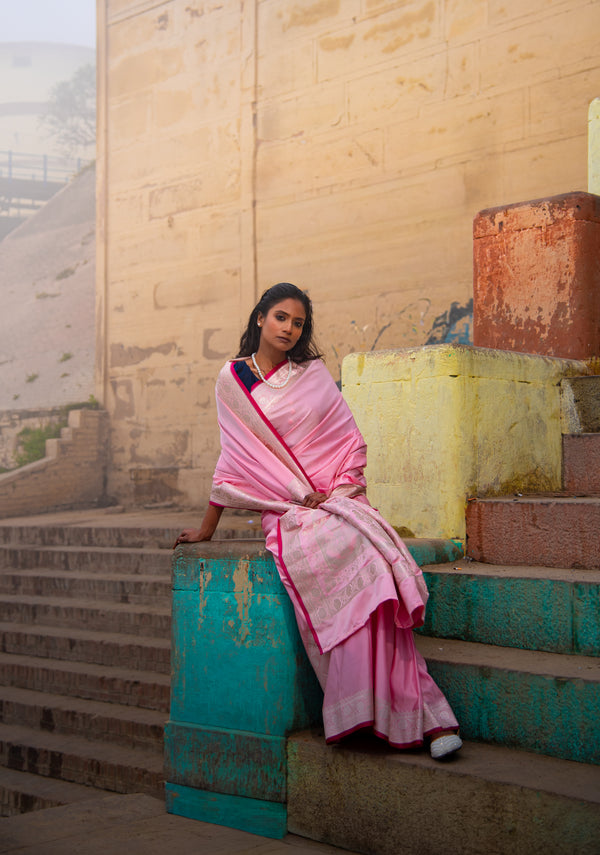
Pure mulberry silk Banarasi sarees for the wedding week — Katan, Tanchoi, tissue, Sonarupa.








Related guides
Pillar guides, sibling pages, and the wedding-weight collections drawn directly from the Varanasi looms.
Continue reading
Verified buyers · reviews collected within 30 days of the wedding