

SILK SAREE UNDER ₹50,000
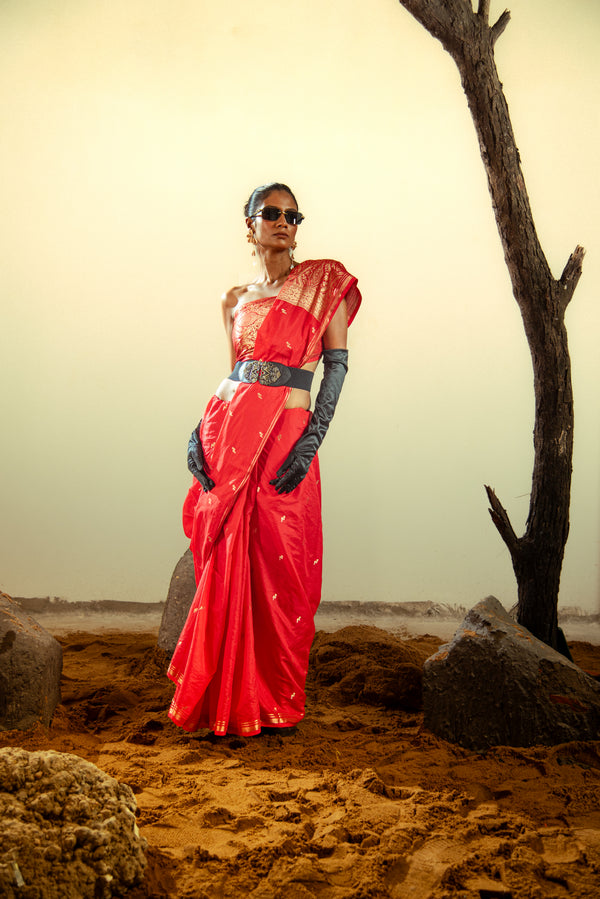
Authentic handloom Banarasi silk sarees under ₹50,000 — pure mulberry silk, real tested silver zari, GI-tagged, woven in Varanasi. The price-point at which handloom becomes the accessible default, not the splurge.
A silk saree under ₹50,000 sits at an interesting price-point in the Indian saree market. Below ₹6,000, you are almost certainly buying powerloom with plastic zari. Above ₹1,00,000, you are paying for wedding-weight Katan and full meenakari pallu. Between ₹15,000 and ₹50,000 is the sweet spot where real handloom Banarasi silk becomes accessible — pure mulberry silk warp and weft, real tested silver zari, GI-tagged, signed by the weaver, and built for re-wear across years of festive and occasion calendar. This page brings together the Danyah Banaras Banarasi sarees under ₹50,000 — the sarees we recommend to first-time handloom buyers, to women building a working saree wardrobe, and to anyone who wants the authority of a Madanpura piece without the wedding-trousseau commitment.
The ₹15,000-50,000 price band is where the Banarasi tradition is most accessible — and where the buyer needs to know what to look for to separate real handloom from powerloom dressed in handloom marketing. Three weave categories sit in this band; each has a distinct identity and re-wear vocabulary.
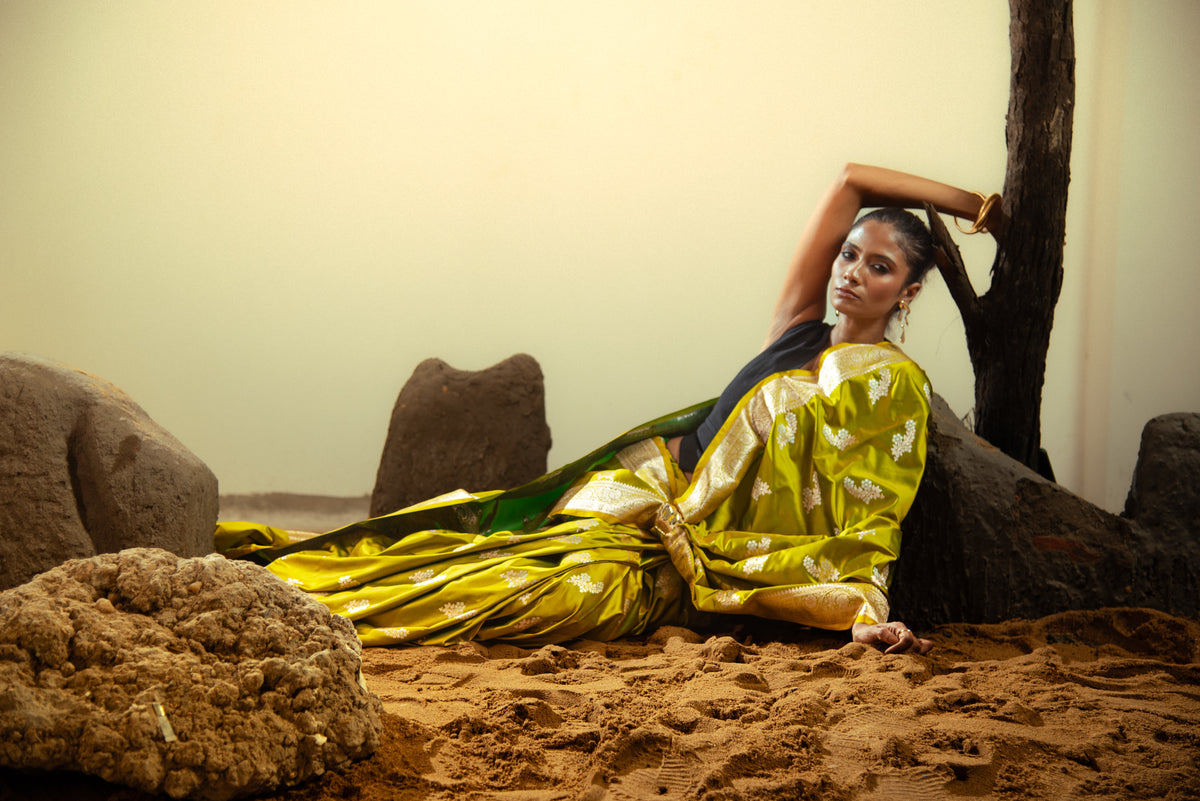
Medium-weight Katan silk Banarasi (₹25,000-50,000): The single-most versatile saree at this price-point. Pure mulberry Katan, kadhua brocade in 3-5 inch borders, restrained body work (buti jaal rather than full kadhua field), real tested silver zari. Photographs beautifully under both daylight and warm-banquet lighting. The piece you will wear to anniversaries, Diwali, family weddings (as a guest), and reception evenings for the next decade. Weave time at the loom: 30-60 days.
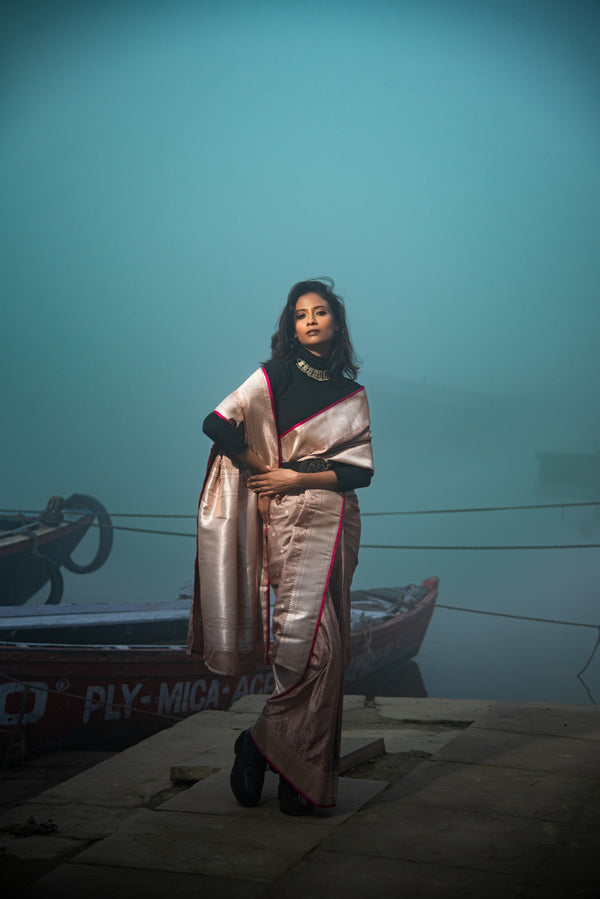
Tanchoi Banarasi (₹35,000-50,000): Extra-weft brocade Banarasi in single-tone or jewel-tone palettes — oxblood, plum, deep teal, rose-gold, sage green. Quietly opulent rather than overtly bridal. Mid-weight, drapes fluidly, photographs as 'reception-appropriate'. The Tanchoi at this price is the textile of choice for women dressing for receptions, anniversaries, and the formal-but-not-bridal end of the calendar. Weave time: 35-50 days.
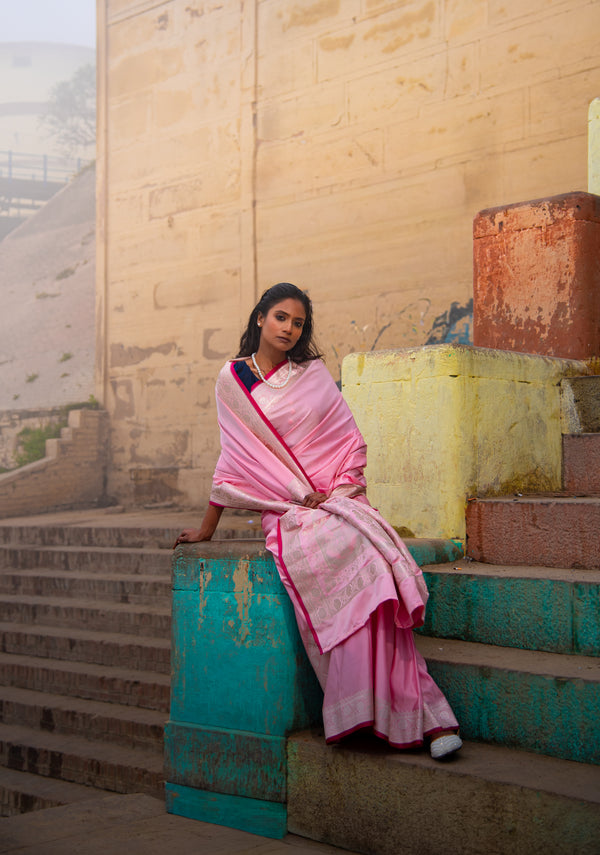
Organza Banarasi (₹18,000-40,000): Sheer, gauzy, almost translucent silk with crisp drape — the daytime wedding and lunchtime occasion piece. Light enough to dance in, structured enough to photograph as 'precious'. Pinks, ivories, sea-greens, sunset oranges are the dominant palette at this price. The organza is also the easiest first-handloom Banarasi to recommend for buyers transitioning from synthetic 'silks' — the lightness is immediately, viscerally different. Weave time: 20-35 days.
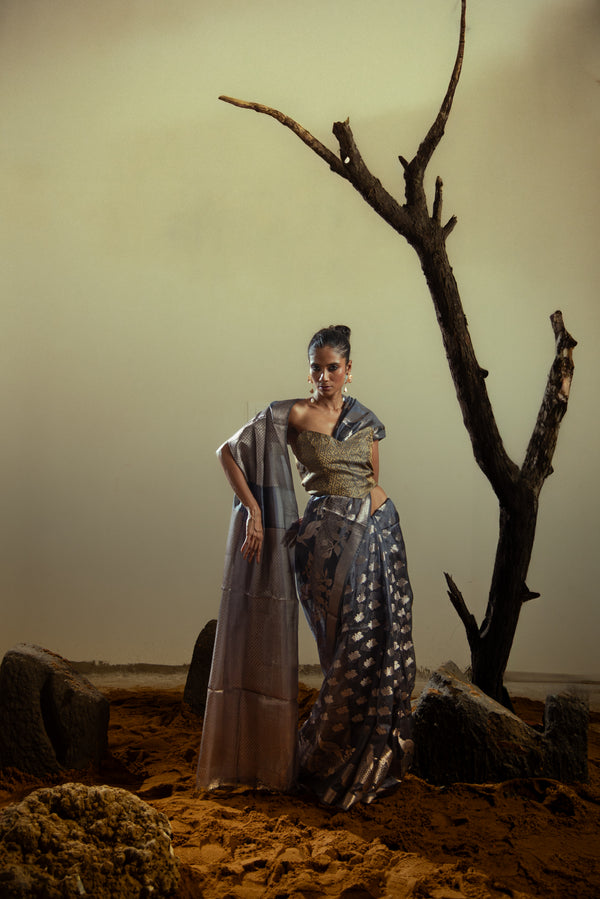
Sonarupa silk Banarasi (₹25,000-50,000): Silver-warp silk with a distinctive metallic shimmer in the base textile (the warp threads are wrapped in fine silver before weaving). Reception and festive choice for women who want a quietly metallic register without the weight of a tissue Katan. Weave time: 25-40 days.
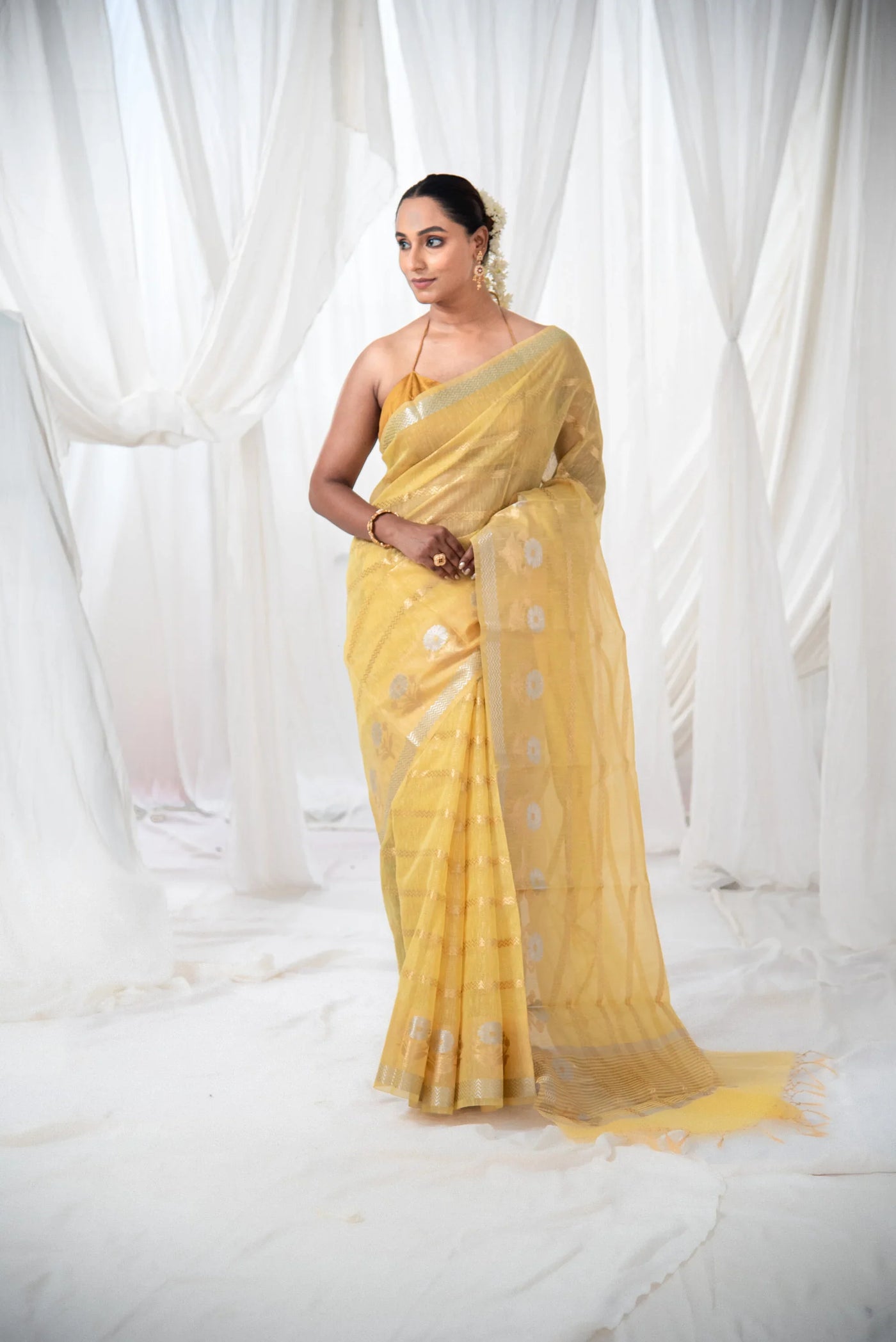
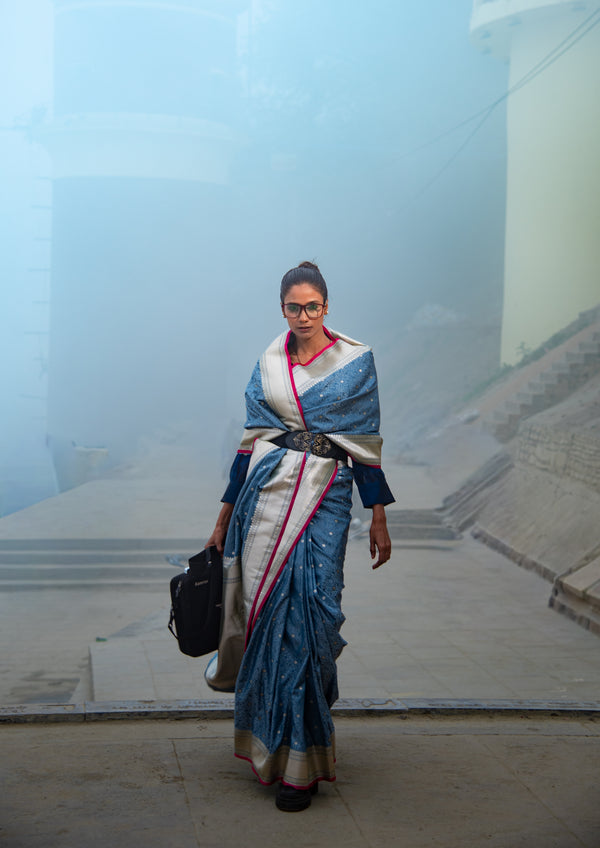
Linen Banarasi (₹15,000-30,000): The summer cousin of the silk Banarasi — pure linen handwoven with a real-zari border. Cool, breathable, structured. Daily-formal wear at its best; pairs equally well with the office and with a Sunday lunch. Often the gateway Banarasi for buyers who want handloom heritage in their daily wardrobe rather than only at festivals. Weave time: 15-25 days.
Three checks separate a real Banarasi saree under ₹50,000 from powerloom imitations sold at the same price-point. The reverse of the pallu: a real kadhua handloom has clean motifs on the reverse, no continuous floats. The weaver's signature: woven into the inner edge near the pallu — present on every authentic piece, absent on powerloom. The GI tag certificate: paper certificate naming the cluster of origin (Varanasi, Mubarakpur, Bhadohi, Chandauli, Jaunpur, Azamgarh, or Mirzapur), the weaver, the loom-type, and the brocade technique. Every Danyah Banaras saree at every price ships with the full certificate; if a seller cannot produce this paperwork below ₹50,000, the saree is almost certainly powerloom.
The pre-drape option is especially relevant at this price-point. A ₹35,000 Tanchoi pre-draped saree is the working-woman's wedding-guest piece — slips on in sixty seconds, photographs perfectly, no draper required. The pre-drape adds ₹6,000-10,000 to the saree price (depending on the petticoat fabric and the blouse spec); we include the petticoat and the matching blouse in the price.
For first-time buyers in this band: start with a medium Katan in a neutral or jewel tone, then add a linen Banarasi for daily wear, then a Tanchoi or organza for occasions. Three pieces in this price band give you a real-handloom saree wardrobe for under ₹1,20,000 — re-wearable for a decade, GI-tagged, and the foundation of a heritage wardrobe rather than a series of disposable synthetic 'silks' that flake within three years.
FAQ
A real Banarasi saree under ₹50,000 is a handloom Banarasi in pure mulberry silk or linen with real tested silver zari and a GI tag. The price-point covers medium Katan (₹25,000-50,000), Tanchoi (₹35,000-50,000), organza (₹18,000-40,000), Sonarupa (₹25,000-50,000), and linen Banarasi (₹15,000-30,000). These are real handloom pieces — not compromise versions of bridal Banarasis. A 'Banarasi saree' sold below ₹6,000 is almost certainly powerloom with plastic zari; the under-₹50,000 handloom band is the accessible-luxury sweet spot.
A silk saree under ₹50,000 is for the first-time handloom buyer transitioning from synthetic 'silks', for the working woman building a real-handloom wardrobe across two or three years, for the occasion buyer who wants a Banarasi for a specific wedding or festival without a bridal commitment, and for the gift buyer (anniversary, Diwali, milestone birthday) who wants real handloom heritage without breaking the trousseau budget. NRI buyers also use this price-band heavily — three pieces in this band give a full festive wardrobe in a single India visit.
Three filters. Weave: medium Katan for versatile festive wear, Tanchoi for receptions and anniversaries, organza for daytime weddings, Sonarupa for a quietly metallic register, linen for daily formal. Colour: neutrals and jewel tones re-wear better than singular bright shades; pick what you do not already own. Provenance: confirm the GI tag, the kadhua reverse, the weaver's signature, and the certificate naming the cluster. Skip anything that cannot produce paperwork — at this price-point, paperwork is the difference between handloom and powerloom.
Both options are available. The traditional six-yard drape requires a draper or 20-30 minutes of self-drape; many of our customers in this price-band still drape traditionally because the piece is for occasions where a draper is on call. The pre-drape adds ₹6,000-10,000 to the price (including the matching blouse and petticoat) and slips on in sixty seconds — best for working women buying their first Banarasi for office and occasion wear, or for NRIs who do not have on-call drapers. The textile is identical; only the wearing experience differs.
A real handloom Banarasi silk saree at any specification cannot be produced profitably below approximately ₹6,000-8,000; the weaver-wage labour cost alone (calculated at a fair Madanpura artisan wage) exceeds that price. In the ₹15,000-50,000 band, you are paying for 20-60 days of master-weaver labour, pure mulberry silk or pure linen, real tested silver zari, the GI certification process, and the cluster ecosystem that supports the weaver families. A 'Banarasi saree' priced below ₹6,000 is powerloom synthetic with plastic zari that flakes within three years — it cannot economically be anything else.
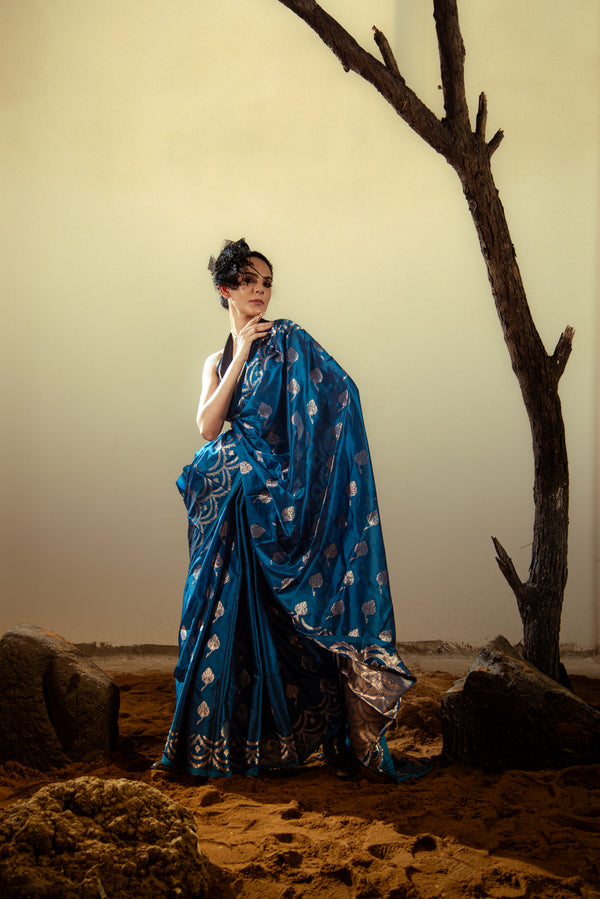
Handloom Banarasi silk and linen sarees under ₹50,000 — real silver zari, GI-tagged, weaver-signed.







Related guides
Pillar guides, sibling accessible pages, and the silk and linen collections drawn from the Varanasi looms.
Continue reading
Verified buyers · reviews from first-time handloom Banarasi buyers